India has been known as the land of spices for centuries. Today, premium Indian spices continue to shape kitchens, food brands, and food industries across the world. Buyers from the USA, Europe, the Middle East, Africa, and Asia rely on spices from India for their strong aroma, rich color, and consistent quality.
This blog explains how Indian spices move from farms to international buyers. It also highlights quality standards, export processes, and global demand. The focus is on clarity, trust, and the real workings of the Indian spices export ecosystem.
India's Role in the Global Spice Industry
The Indian spice industry is one of the largest in the world. India grows more than 50 types of spices in different regions. Each region offers unique soil, climate, and farming practices. These factors give Indian spices their distinct flavor and strength.
The Indian spices market serves both domestic and global demand. A large share of production goes into exports. Countries prefer Indian spices due to steady supply, skilled farmers, and strong processing systems. As global food habits expand, global spice demand continues to rise.
Indian Spice Production at the Farm Level
The journey begins with Indian spice production at farms. Farmers grow spices like turmeric, cumin, chilli, pepper, and cardamom using time-tested methods. Many farmers now follow improved farming practices to meet export quality standards.
Spices Grow in Different Zones
- Turmeric and red chilli grow in warm regions
- Cumin thrives in dry climates
- Pepper and cardamom grow in humid areas
Farmers harvest spices at the right maturity stage. Proper harvesting protects aroma, oil content, and color. This step plays a key role in maintaining premium spice quality.
Cleaning, Drying, and Primary Processing
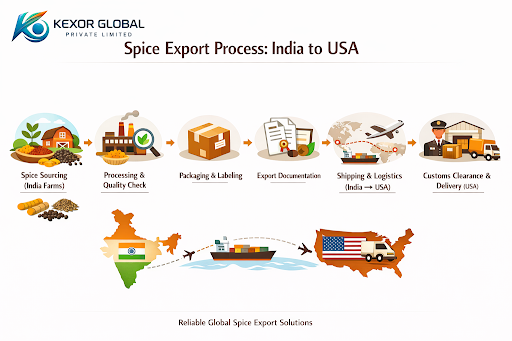
After harvest, spices move to processing units. This stage ensures safety and shelf life. Workers clean spices to remove stones, dust, and damaged pieces. Drying reduces moisture and prevents spoilage.
Processing Methods by Spice Type
- Chillies: Dry under controlled heat
- Turmeric: Boils and dries before grinding
- Pepper: Dries naturally or mechanically
These steps strengthen the spice supply chain and prepare products for export-grade processing.
Quality Control and Export Standards
Quality control is critical in the Indian spices export process. Exporters test spices for purity, moisture, color value, and oil content. They also test for pesticide residue and microbial safety.
Exporters follow international food safety standards. Many units hold certifications like ISO, HACCP, or FSSAI compliance. These checks help deliver export quality spices that meet global regulations.
Quality control also supports traceability. Buyers want to know the source of their spices. Strong traceability builds trust and long-term partnerships with Indian spice suppliers.
Processing and Value Addition
Processing units convert raw spices into ready-to-use forms. This stage includes cleaning, grinding, blending, and packaging.
Common Processed Products
- Turmeric powder export for food and health uses
- Red chilli powder for spice blends
- Cumin seeds India for whole spice markets
- Black pepper export for seasoning
- Cardamom export for premium culinary use
Advanced machines ensure uniform texture and consistent taste. Proper processing helps Indian exporters meet the needs of bulk buyers, private labels, and food manufacturers.
"A structured sourcing approach—focused on materials, certifications, and supplier transparency—ensures long-term success."
Packaging for Global Markets
Packaging protects spices during long-distance shipping. Exporters use food-grade packaging materials that prevent moisture, air, and contamination.
Packaging Formats
- Bulk bags for wholesalers
- Retail packs for brands
- Customized labeling for private labels
Good packaging preserves freshness and extends shelf life. It also supports brand reputation in international markets.
Logistics and Global Distribution
Once packed, spices move through export logistics channels. Exporters manage documentation, customs clearance, and shipping schedules. Most shipments travel by sea, while premium or urgent orders use air freight.
Efficient logistics reduce delays and protect quality. A strong logistics network keeps the spice supply chain smooth and reliable. This reliability is vital for meeting global spice demand.
Top Exported Spices from India
India exports a wide range of spices. Some of the top exported spices include:
- Turmeric
- Cumin
- Black pepper
- Red chilli
- Cardamom
- Coriander
- Fenugreek
Each spice serves different cuisines and industries. This variety helps India stay competitive in the global market.
Spice Export Trends and Market Growth
Spice export trends show steady growth. Health awareness, ethnic foods, and ready-to-eat products drive demand. Buyers now look for clean-label and natural ingredients. This shift supports the rise of farm to table spices.
Digital trade platforms and improved cold chains also boost exports. Indian exporters adapt to these trends by improving quality, transparency, and supply consistency.
Why Global Buyers Choose Indian Spice Suppliers
Global buyers prefer Indian suppliers for many reasons:
-
Wide product range
Access to over 50 varieties of spices from different regions
-
Large-scale production
Ability to fulfill bulk orders consistently
-
Competitive pricing
Cost-effective solutions without compromising quality
-
Strong quality systems
International certifications and rigorous testing protocols
-
Experience in global trade
Established export networks and documentation expertise
Reliable Indian spice suppliers understand buyer needs. They offer flexible quantities, private labeling, and long-term supply contracts. These factors make India a trusted source of premium spices.
Conclusion
Supplying premium Indian spices from farm to global buyers requires care at every step. From farming and processing to packaging and logistics, each stage protects quality and safety. India's strong farming base, skilled workforce, and export expertise support this journey.
As global spice demand continues to grow, India remains a key player. Buyers who partner with trusted Indian exporters gain access to consistent supply, rich flavors, and export-ready products. This strong system keeps Indian spices at the heart of global kitchens and food industries.
Working With Kexor Global
Kexor Global supplies premium Indian spices designed for global food brands, manufacturers, and distributors. Our product range includes turmeric powder, cumin seeds, black pepper, red chilli, cardamom, and other high-quality spices.
We work with certified suppliers, follow international quality standards, and support global buyers with consistent quality and reliable export logistics.
To request samples, pricing details, or shipping information, contact Kexor Global directly.
Contact Us for SamplesFrequently Asked Questions
Why do international buyers source spices from India?
India offers abundant natural resources, diverse spice varieties, competitive pricing, established quality systems, and strong export infrastructure, making it a trusted global spice supplier.
How can buyers verify spice quality before ordering?
By requesting samples, reviewing quality certifications (ISO, HACCP, FSSAI), checking test reports for purity and safety, and confirming traceability from farm to export.
Which Indian spices are most commonly exported?
The most exported spices include turmeric, cumin, black pepper, red chilli, cardamom, coriander, and fenugreek, serving diverse global cuisines and food industries.